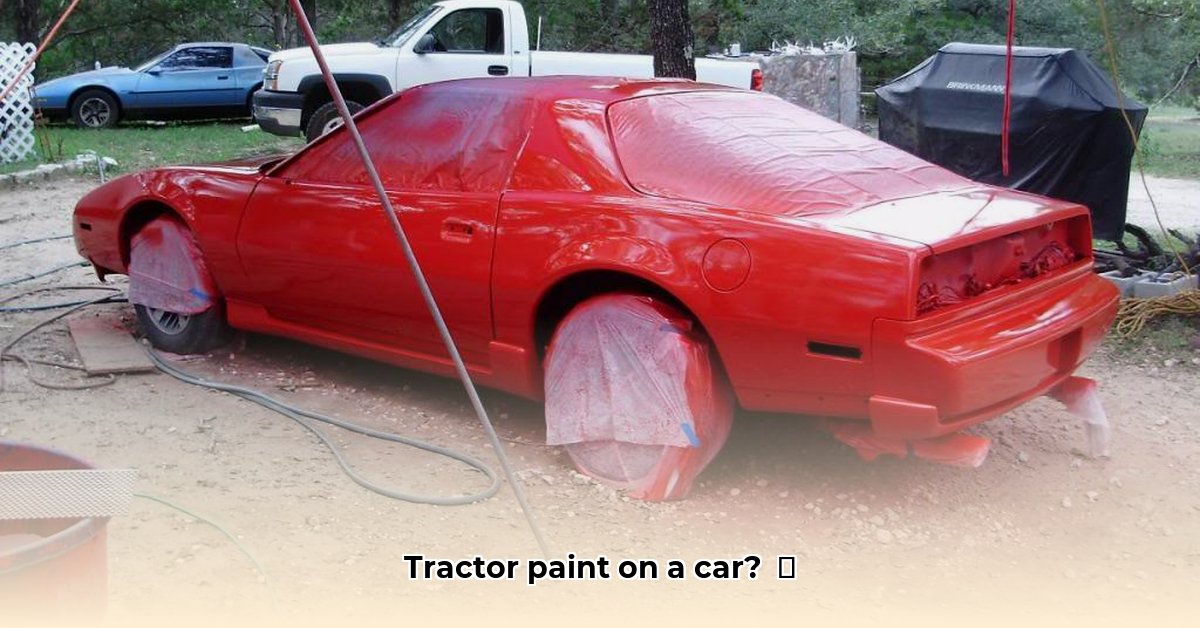
Let's revamp your ride without emptying your wallet! Painting your car with tractor paint offers a surprisingly durable and affordable DIY project. This guide provides a step-by-step approach to achieve a professional-looking finish, even if you're a first-timer. For more information on cost-effective solutions, check out this helpful resource.
Gathering Your Supplies: The Essential Toolkit
Before you start, gather these crucial materials and tools. Think of this as your pre-game checklist for success! A well-stocked arsenal is key to achieving a flawless paint job.
- Tractor Paint: Rustoleum Farm and Implement enamel is a popular choice known for its durability. Consider urethane options for a potentially superior finish.
- Automotive-Grade Primer: Essential for paint adhesion and a uniform base coat. Skipping this step is like building a house without a foundation!
- Sandpaper: Various grits (80, 180, 320) are needed for surface preparation. Start coarse, then refine.
- Cleaning Supplies: Degreaser, soap, water, and rags for thorough cleaning. A pressure washer helps remove stubborn grime.
- Safety Gear: Gloves, respirator mask, and safety glasses are absolute must-haves. Your health is more important than a paint job!
- Application Tools: Brushes (various sizes), a roller (for larger areas), and optionally, a spray gun (for a more even and professional finish).
Surface Preparation: Laying the Foundation for Success
This is arguably the most crucial step. A poorly prepared surface will lead to a poor paint job, no matter how good the paint is! This is where your meticulous craftsmanship will shine.
- Clean: Thoroughly wash the car to remove dirt, grime, and debris. Use a degreaser to eliminate grease and oil.
- Rust Removal: Address rust spots with a wire brush, sandpaper, or a rust converter. Rust is the enemy of a good paint job. Thorough rust removal is crucial before sanding.
- Sanding: Sand the entire surface, starting with coarser grit (around 80) then moving to finer grits (180 and 320). This creates the perfect smooth base for the primer. This intensive step ensures exceptional adhesion.
- Priming: Apply an automotive-grade primer. This ensures better paint adhesion and provides an even base coat. Follow the manufacturer's instructions precisely for drying times.
Paint Application: The Art of Even Coats
Now comes the fun part! However, remember that patience is key to a spectacular result.
- Application Method: Whether you use brushes, rollers, or a spray gun, thin coats are crucial. Multiple thin coats are far superior to one thick coat that runs and sags. A spray gun provides the best, most even finish.
- Spraying (Recommended): If using a spray gun, maintain a consistent distance and even spray pattern. Overlap slightly for complete coverage. Consistent pressure is vital.
- Roller or Brush Application: Use smooth, even strokes to avoid streaks. Maintain a wet edge to prevent noticeable lap marks.
- Drying Time: Allow ample drying time between coats – follow the paint manufacturer's instructions. Impatience leads to frustration!
Finishing Touches: Polishing and Achieving That Perfect Shine
Once fully cured (allow ample time!), consider these steps:
- Wet Sanding (Optional): Wet-sand with progressively finer grits to smooth imperfections. This is optional but yields a superior finish.
- Polishing (Optional): Use automotive polishing compound and a buffer for a mirror-like shine. This removes sanding marks and enhances the overall appearance.
The Reality Check: Limitations and Considerations
Tractor paint, while durable and economical, has limitations:
- Limited Color Options: Your color choices will be fewer than with automotive paints.
- Less Glossy Finish: Expect a less glossy finish compared to professional automotive paint jobs. However, it has its unique charm!
- Surface Preparation is Critical: Thorough surface preparation is even more critical than with most other paints.
Troubleshooting: Addressing Common Issues
- Runs and Drips: Let the paint dry, then gently sand smooth before re-applying a thin coat.
- Uneven Color: Apply additional thin coats until you achieve a uniform appearance.
- Significant Mistakes: Don't panic! Focus on less visible areas for practice.
Weighing the Pros and Cons: Is Tractor Paint Right for You?
Pros: Significantly cheaper than auto paint, exceptionally durable, relatively easy application.
Cons: Fewer color options, less glossy finish, requires meticulous surface preparation.
Ultimately, using tractor paint offers a cost-effective and durable solution for automotive painting, especially for projects where durability and cost-effectiveness are prioritized over a perfectly glossy, showroom-quality finish.